

My grandfather Pasquale (born in 1871), orphaned at the age of seven, walked from Pavia to Milan in 1878 to work as an apprentice tinsmith in the then-popular Via Borgospesso, a street just off the now-famous fashion street: Montenapoleone. In a few years, he became a skilled "bench" tinsmith, a worker who operated in the workshop and distinguished himself from the "tolée de tècc" (roof tinsmith) who installed gutters and roof shoes. The former was considered a true artist, for his high skill in working with tin, tinned sheet iron, and thin sheets of tin-plated copper used for the production of cake molds, coffee makers, oil lamps, buckets, tubs, and all those household items that, years later, would be produced by metallurgical industries and later by plastic ones. Like origami, a technique developed in the East in past centuries that teaches folding a sheet of paper to obtain models of animals, flowers, boxes, decorative and geometric objects, my grandfather made molds and cookie cutters from sheets of tin using only a pair of shears and a soldering iron. It has always been a pride for chefs and pastry chefs to aesthetically complete the dishes with trimmings and borders that were then applied both to hot starters and main courses. These decorations were obtained, with appropriate cookie cutters, from thin slices of square bread, fresh pasta, or English-cooked pasta
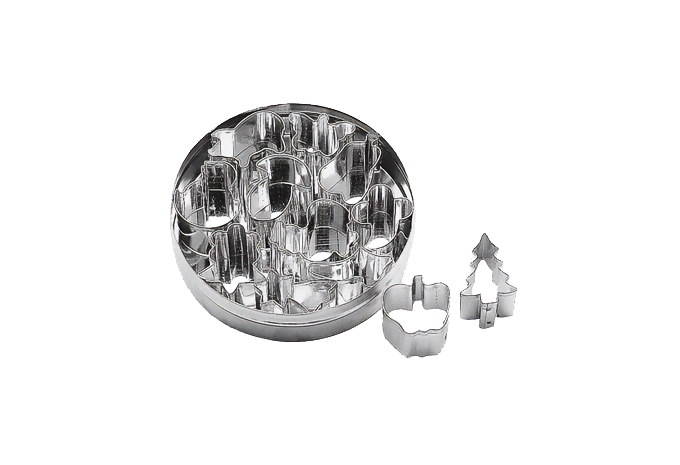
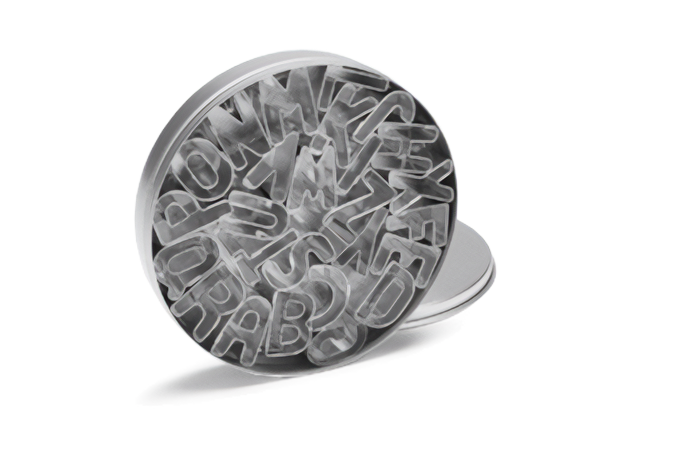
For the garde-manger chefs, those who in the kitchen brigade also have the task of preparing cold dishes in jelly, such as aspic and galantines, my grandfather invented molds similar to royal crowns, Gothic spires, and merloned bastions, true works of manual art. Some of them, found damaged under the rubble of his workshop after a bombing durint the Second World War, i still lovingly keep in the small museum set up in my company.
These molds recall a dramatic, hard, and tiring period of life for my grandfather, father, and even for me as a child, but looking at them today, i can uderstand how great the pleasure of my grandfather, artisan-artist, was in producing utensils and object that, in addition to their utility, appeared pleasant in design and execution, highlighting his manual skills, inventiveness, and good taste.
Eugenio Medagliani