
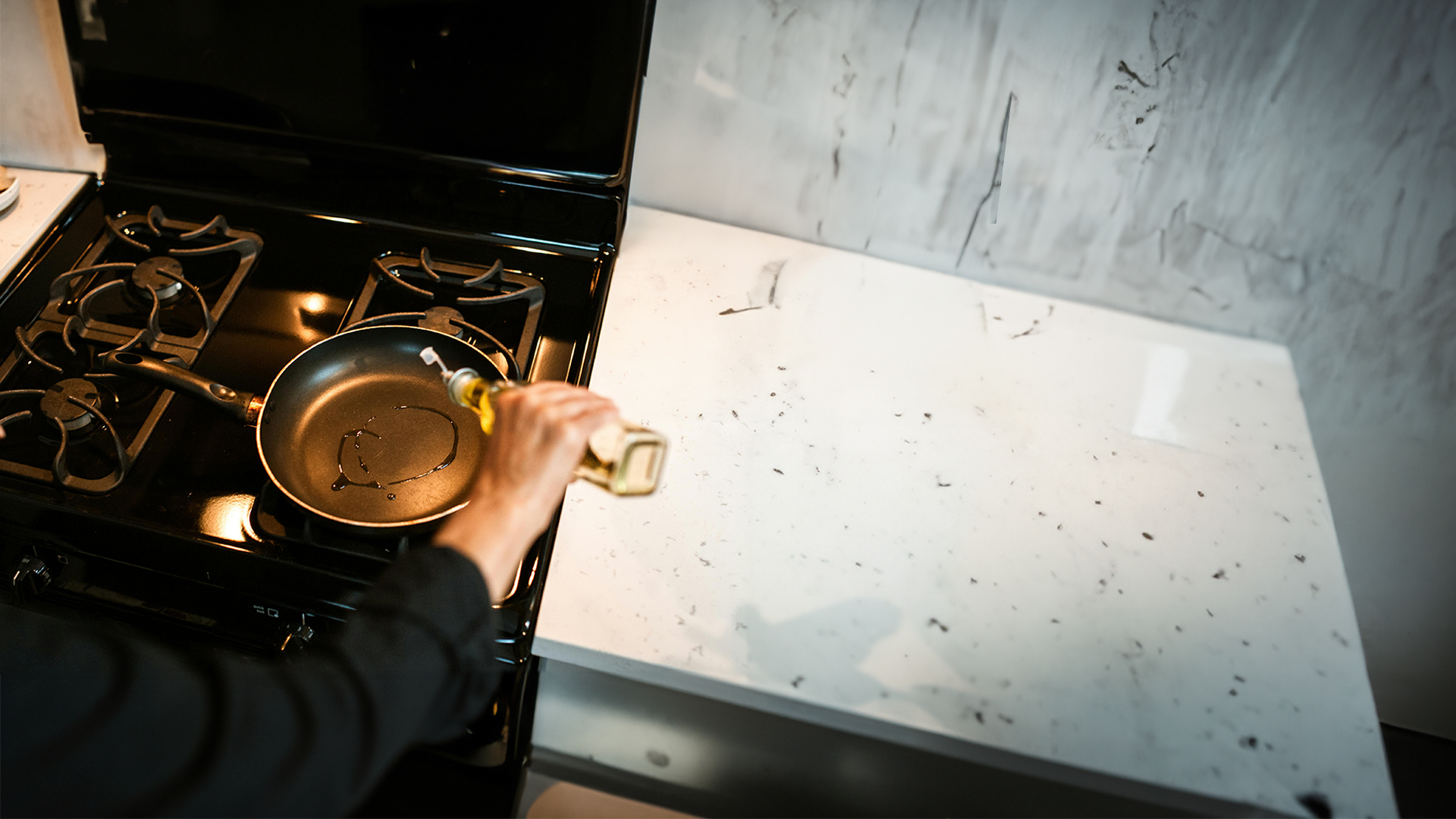
Frying' is a cooking method in which food is placed in hot fat heated to a high temperature. This should be done as quickly as possible until the food is crisp, crunchy and golden brown.
There are two types of frying: pan-frying and deep-frying. In the first method, the level of cooking fat should only cover the bottom of the pan, so the food must be turned (sauteed) to cook evenly. In the second method, the fat should completely cover the food (deep-frying).
Of the various utensils used for frying, the two most commonly used are the pan in the western world and the wok in the eastern world.
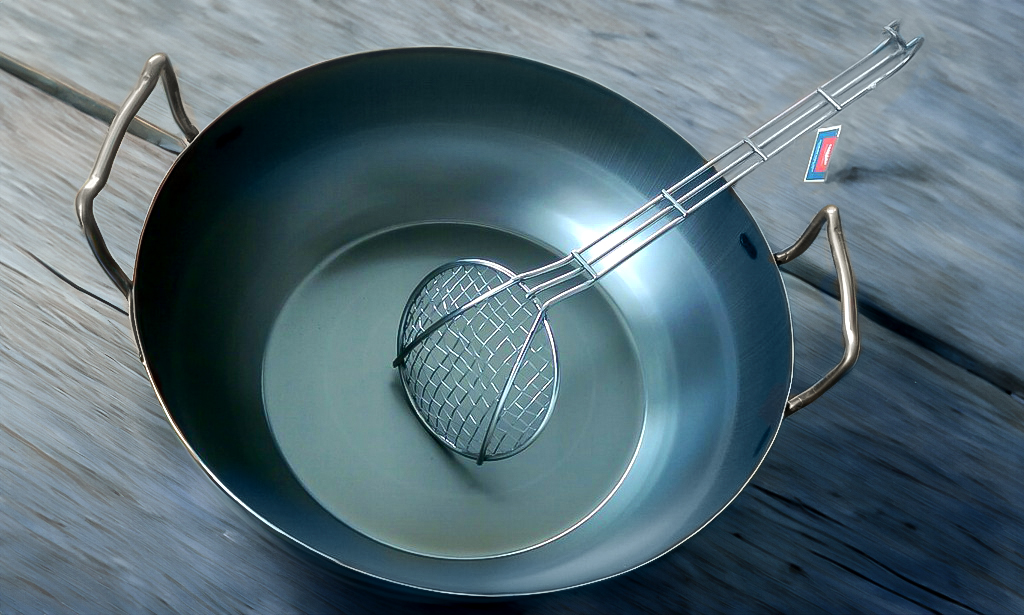
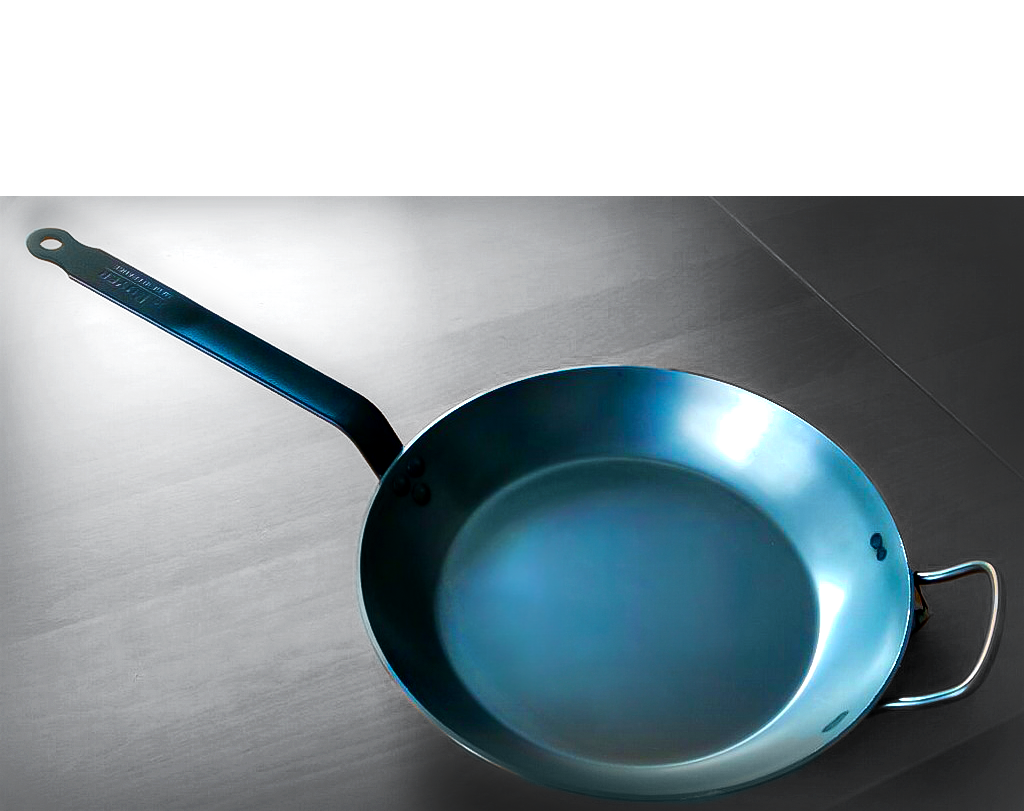
The skillet is a low pan with curved sides and a handle whose length is generally equal to its diameter, ensuring a balanced grip on the stove. Black iron (not tinned) is the most suitable metal for all types of frying. Thanks to its property of being a poor conductor of heat (60°), iron, when used in a thick layer (2-3 mm), acts as a temperature regulator, preventing a sudden rise in temperature inside the pan, which could risk burning the food.
In addition, the curvature of the sides is essential for rolling omelettes and for some of the frying techniques typical of regional Italian cuisine.
In its current form, the iron skillet (called lionese) probably dates back to the 17th century, although its origins are much older. In fact, one of the first examples was found during excavations in Pompeii.
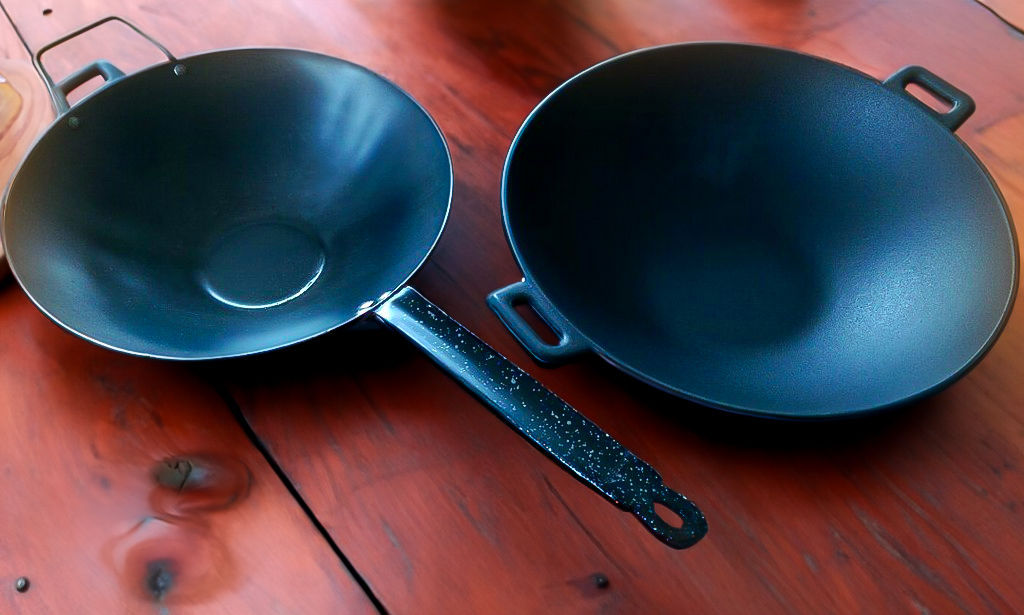
The wok, on the other hand, is a container made of iron or cast iron with a curved bottom and very open sloping walls.
In the East it is the 'all-purpose cooker', suitable for steaming, making soups, frying and all the other culinary adventures of the East. Woks come in various sizes, from 40cm to 2 metres in diameter. The main advantage of cooking in a wok is that the food can be stirred quickly and removed before it absorbs too much fat, using the rapid cooking method (even for just 20 seconds), the most common method used in China to cook food cut into small pieces.
The fast cooking method was introduced in China during the Zhou dynasty (around the 1st century BC) when there was a severe shortage of firewood. The forests had been largely converted into agricultural land to feed an increasingly large population. Fast frying emerged as an alternative cooking method to save firewood used as fuel. Food was pre-cut to facilitate faster cooking. During the Zhou era, very few people owned wooden tables to place their dishes on, a luxury considering the scarcity of wood. It was necessary to invent a utensil that allowed people to eat with one hand while holding a bowl of rice with the other. Thus, chopsticks or sticks were created, which allowed people to pick up hot food from the bowl without burning themselves and without getting dirty with the sauces used to season most dishes.
Amidst such a wood crisis, only a few chopsticks were made of wood; most were made of animal bones so they could accompany their owner for a lifetime.
Eugenio Medagliani, "Humanist Calderaio"
The photographed tools are in order:
- Curved iron frying pan
- Heavy iron frying pan
- Non-stick wok and cast iron wok